The Reading Revolution Starts Here – DWL Readers’ Club

by Farheen Zehra


Reading is a solitary activity, whether you’re doing it on a crowded beach, in an airplane, on a train, in a queue or curled up on your sofa at home. It’s only once you’ve pored over the book that you get the itch to share your excitement, disappointment or frustrations about the story. And for book aficionados, there is a certain high in having an intelligent conversation about a piece of literature.

Enter the DWL Readers’ Club. This is no ordinary book club – consider it a sort of reading movement. We’re coming across too many people who want to be great writers and barely any who want to be better readers. We’ve noticed that more and more people (including us) are falling back on the “I don’t have time to read” excuse. We’re fed up of hearing hours of detailed analysis of TV shows but scattered conversation on books. Don’t believe us? Next time you go to a regular social gathering, ask someone what they are reading these days, then ask them what they’re watching these days.

Our manifesto is simple – read more, read widely, read better, and learn from it. We want to become more critical readers and we want to use this to become better writers. If you’re an aspiring writer, then this will be especially useful for you because many of us practice the craft too. Many new writers search high and low for creative writing courses, not realizing that books are one of the best sources of both inspiration and technique. If you’re in Karachi, come over to the Readers’ Club meet and dissect plots, characters, writing styles, voice, pace, themes and more.

The Readers’ Club officially started as an offline DWL activity on 6th June 2013. A few of us met at The Second Floor (T2F) and talked about Nabokov, sci-fi novels and movie adaptations over tea and brownies. After throwing a few names around the table we finally decided to read ‘American Gods’, an award-winning novel by Neil Gaiman. Most of us had not read Gaiman before, so we welcomed this chance to push ourselves out of our reading comfort zones.

Besides making reading ‘fashionable’ again, we are using this platform to raise funds for Desi Writers Lounge. We will charge a small fee of Rs.200 per session which will go towards DWL’s various online and offline activities.

Our next meet is on 21st June, at the Roadside Café behind Boat Basin, at 7:00 pm. Come over and join us over a cup of tea for an hour or two of literary catharsis.

Review: ‘And the Mountains Echoed’ by Khaled Hosseini

Guest post by Hareem Atif Khan


‘Out beyond ideas

Of wrongdoing and right doing,

There is a field.

I’ll meet you there.’


And the Mountains Echoed‘And the Mountains Echoed’ begins with a Rumi quote. Khaled Hosseini keeps this promise and does indeed usher the reader into a field where there is no right and no wrong, where ‘cruelty and benevolence are but shades of the same color.’ Many readers want to know: “How is this third novel different from his previous two?” Well, one big difference is that unlike the ‘Kite Runner’ and ‘A Thousand Splendid Suns’ there is no untarnished hero, no irredeemable villain. There is only life, and circumstance, and the reader is set up to ponder over rather than judge each character.

Part of Hosseini’s brilliance lies in the firmness with which he pulls together the strings of the Mashreq and Maghreb until, in flat defiance of Kipling’s prophecy, that twain finally meets. He uses English as the deft medium but the novel defies the classical western tradition of the ‘story arc’. That is, there is no simple “exposition, conflict and resolution”. Instead, from his very first chapter, Hosseini proceeds in the timbre of the ancient storytellers of the east, spinning many different tales, sometimes leaving the listener at the clutching throes of one before tumbling headlong into a totally different other. Of course the tales are connected. A character from one tale sometimes appears in another (as in the Ramayana or the Arabian Nights). And they all emerge from a common womb.

That womb is Afghanistan. Protagonists may spill in from Greece or spill out into France and America, but a merciless Kandahari wind blows through their lives wherever they are. Though it is about Afghanistan, this is not a book about war. In the voice of one of his characters, Hosseini explains: “I need not rehash for you the those dark days. I tire at the mere thought of writing it, and, besides, the suffering of this country has already been sufficiently chronicled…” The war may thunder on in the background but the real stories are of separation and pain, of sibling rivalry and forbidden love, of duty, identity and complicated parent-child relationships that span a lifetime.

The reader will meet leg-revealing, cigarette-smoking Nila, who rebelliously scratches down erotic poems with her pen and also Parwana, who bears none of the lightness that her name implies. The reader will meet humanitarians who rush in to heal Afghans from the war and watch how they manage, in the process, to heal themselves. Above all, the reader will question, whether a little girl whisked off to Paris or a little boy pampered in an ivory tower were better off than children who faced the poverty and war. As we can expect from life, and from the great literature that mimics it, there is never an easy answer.

Yes, it is possible to find flaws in ‘And the Mountains Echoed’ starting with the clumsiness of the book-title itself. Readers who are used to plots that provide instant gratification or satisfying resolutions will have a bone to pick with Husseini’s refusal to create neat little endings to the wounds he gashes open. The multiple sub-plots can feel distracting, especially to readers who prefer to finish their novels in one sitting. And of-course readers who dislike crying will be downright mortified. By the time she reached the last sentence, this reviewer had raw eyes.

How many stars for this book? As many as shine down on the deserts of Afghanistan.


(Hareem Atif Khan is a teacher and a curriculum expert who lives in Islamabad. She blogs at moonshine-scribbler.blogspot.com/. Follow her at @overtaketrucks.)

Guest Post – the inaugural Islamabad Literature Festival 2013

Written by Mariam Saleem Farooqi


The Islamabad Literature Festival sort of snuck up on the good people of the capital. After a brief announcement in a few newspapers, ILF withered away with no website or social media presence to speak of, leading to the suspicion it had been abandoned. And then, lo and behold, a week before the event the KLF website unveiled a little Islamabad tab showing a program of events, and so ILF came shuddering back to life.

One immediate bone of contention with the festival was the timing. Why the middle of the week and not a weekend? As expected, Day One of the ILF saw many half-empty halls and a general absence of the throng one expects at festivals of any sort because people could not get out of school/work on a busy Tuesday afternoon.

Walking inside the venue, I couldn’t help envying Lahore. They got their litfest in Al-Hamra, while we have to settle for a small hotel best known as the torture cell where CIE examinations and aptitude tests are suffered through. Nonetheless, the presence of books everywhere lifted the mood considerably. Festival spearhead Oxford University Press had a massive stall up and running, as did Liberty Books, Sang-e-Meel Publications and a number of other national and local publishers.

At 2:50 p.m. I slipped inside auditorium hall to find that the talk scheduled for 2:45 p.m. was actually already underway. Colour me surprised. Since when did we start doing things on time?! With that decidedly positive turn of events, I settled in to listen to Aasim Sajjad, Hamida Khuhro, Ashraf Jehangir Qazi and Humayun Gauhar battle it out on the sensitive issue of ‘Dynastic Politics in Pakistan’.

Colour me further surprised when the ramblings of audience members with an inability to understand the term ‘keep it brief’, were smoothly cut short and the session concluded on time, leaving plenty of time for a quick browse through the book stalls before heading to the next talk. ‘YouTube: Supporting the Electronic Media’ boasted a diverse panel – Taimur Rahman (academic, writer and musician), Raza Rumi (journalist and political analyst), Osman Khalid Butt (writer, director, blogger, actor and entertainer) and Ali Aftab Saeed (musician and journalist). They discussed the impact the YouTube ban has had on their respective fields, as well as the possible implications of the alleged order by the government for ‘selective unblocking’. Overzealous moderating was the only weak link in an otherwise interesting discussion.

There was much chatter about Shehzad Roy’s session but unfortunately he was a no-show. Other sessions generated a lot of interest too, with Aamer Hussein’s talk being the most popular. Topics such as child labour, English novels in the new millennium and Sufi classical poetry were addressed by a host of prominent panelists.

So Day One had been pleasant but not earth shattering. It definitely failed to make the kind of impact previously made by KLF and LLF, not even being able to trend on Twitter. Of course, that might have had something to do with the fact that those inclined to tweet about it could not seem to agree on whether #IsbLF or #ILF was the way to go. #ConfusionsAbound

Day Two began with low expectations and a mad rush to make it to the morning Kamila Shamsie session on time, because whoah, it had ALSO started on time. More points for ILF right there. Shamsie was in conversation with Shehryar Fazli. “A novel is an intimate thing,” said Shamsie when asked about how much current events influence an author’s choice of topics. “It has the pressures of time, so it doesn’t make sense to worry too much about expectations. Stick to a topic you are ok with being totally obsessed with for years, one you can let your imagination be consumed by,” she said. Afterwards, the lovely lady gamely allowed a hoard of undisciplined fans to mob her as she signed book after book.

A quick coin toss decided the next session would be the ‘Afghanistan & Pakistan: Conflict and Extremism’ panel discussion by Riaz Khokar, Zahid Hussain, Mohammad Amir Rana and Ashraf Jehangir Qazi. Learned and astute though these gentlemen undoubtedly are, something in the air right then was making it impossible to captivate much of their audience. Many in the back were sporting a dull, glazed look in their eyes – which made it all the more unpleasant when jerked out of their stupor as your friendly neighborhood earthquake came calling. Unperturbed, the panel powered through the brief power outage and odd panicked scream, and continued waxing eloquent on the fragile state of Pak-Afghan relations. The session on ‘Afsanay ki Nayee Awazain’ by Nilofar Iqbal, Asim Butt and Mubashir Zaidi happening simultaneously seemed to be more engaging as the audience could be heard laughing from even behind closed doors, and were reluctant to let it end.

Mohammad Hanif, journalist and author of ‘A Case of Exploding Mangoes’ and ‘Our Lady of Alice Bhatti’, in conversation with the enigmatic Naveed Shahzad was the highlight of the morning. Hanif sat slumped in his chair and, in his relaxed, sardonic manner, let Naveed Shahzad question and poke fun at him. “A writer’s responsibility is to the page. Mocking a dictator is not a social responsibility, it’s fun. Journalists are the ones who actually have this responsibility,” he said. His reading of excerpts from his books was powerful and injected new depth into his writing. Hanif also talked about his recent collection of stories of missing people from Balochistan. “It’s the State that’s responsible. They know they can’t get away with that kind of stuff in other provinces. But when it comes to Balochistan, nobody cares for too long. So they can get away with it.” He said he hoped the publication might shame fellow journalists into taking some action.

The afternoon sessions on Day Two were all packed to capacity. Shehzad Roy was once again absent – caught up in projects in Dubai apparently – much to everyone’s disappointment. Nevertheless, the session on ‘Common System of Education’ proved quite interesting. Speaking on the panel was Baela Jamil, Hamida Khuhro, Nargis Sultana, and A.H. Nayyar, with Ameena Saiyid as the moderator. Each speaker spoke crisply about the complications of establishing a viable common system of education in Pakistan, and managed to keep the audience engaged despite being seated in an outdoor venue at midday in hot April weather.

Strolling from one session to the next was becoming increasingly cumbersome as the number of people kept increasing. Now would have been time for festival organizers to take heed and later disasters could have been avoided. More on that later. Any hopes of snagging a good seat for Zia Mohyeddin’s reading fizzled away as roughly one-third of Islamabad’s total population was already crammed into the medium sized hall. All ages, shapes and sizes of people possible were present. Sitting crammed into six inches of floor space, with an elbow in my side and a little kid poking into my back, all became worth it the minute Zia Mohyeddin climbed up on stage. Dressed in a gray suit that was just the right amount of baggy, and a maroon tie, the dapper gentleman quite literally had the audience at hello. He read aloud from a selection of stories in English. It did not matter what the words were, or what they were trying to say. All that mattered was the way they leapt to life under the influence of Zia Mohyeddin’s gentle yet powerful voice. For just the quarter of an hour that he spoke, the world was truly a better place. Ending to thunderous applause, he patiently allowed fans, well-wishers and reporters to swarm around him.

After all the sessions of the day were over, a brief closing ceremony was to be followed by a showing of ‘The Dictator’s Wife’, a monologue written by Mohammad Hanif and performed by Nimra Bucha. Fifteen minutes before the scheduled time, the hall outside the auditorium was already teeming with people. Considering the intense punctuality demonstrated for two days, there was no reason to expect any different from the last event of the festival. Famous last words. Seven fifteen came and went, with no sign of life from within the closed doors. Suddenly one set of doors was thrown open and the crowd surged forward, only to be met with hysterical crew members who shooed them back out, claiming ‘not time yet!’ Disgruntled and miffed, the crowd was not amused. As the sweaty, stifling wait stretched on, even I stopped judging the folks pounding on doors to be let in and began to wonder if I should just join in. Finally, after over an hour, the doors were thrown open and a mass of humanity burst forth.

After several frenzied minutes with people here, people there, people every where – during which the harassed organizers tried to convince audience members it would be a good idea to watch  on screens outside the auditorium – the play finally began, with Nimra Bucha snaking her way through a throng of people sitting near the stage to get to her place onstage. But wait, it gets better. Many in the audience seemed to think that a one-woman play meant they should help her out with answers and suggestions to her dialogue. Worse were the folks in the back who kept shouting about not being able to hear her even as she tried to deliver her lines. In the midst of this cacophony, an elderly gentleman decided to stroll up onstage and plop himself down on the bed that served as part of the set. To give credit to Bucha, she continued unperturbed despite this series of interruptions, even managing to coax the loud, boorish gentleman to pipe down eventually. Hanif’s writing and Bucha’s performance made quite the dynamic combination, and had it not been for the unfortunate events leading up to it, the play would have been quite a thrill to watch.

All in all, the first ever Islamabad Literature Festival was a better experience than I had expected it to be. With OUP’s Children’s Literature Festival also scheduled to be held in the city at the end of the month, it seems that Islamabad is finally going to get a chance to play in the big leagues. About time, too. The city needs more than just political showdowns and long marches to keep it occupied. Well done, ILF. Come back bigger and better next year!


(The views expressed in this blogpost are the writer’s own. Desi Writers Lounge does not take responsibility for any opinions or factual inaccuracies in this post.)

Interview: Osman Khalid Butt on ‘Siyaah’, screenwriting and things that go bump in the night

Siyaah, an independent horror film produced by Imran Raza Kazmi and directed by Azfar Jafri, recently hit cinemas nationwide. Farheen Zehra got together for a quick Q&A with resident DWLer Osman Khalid Butt, who wrote the screenplay for the film.

FZ: So, a horror story screenplay. How did this happen?

OKB: I’d previously written several scripts [both short and long format] for theatre and had been adapting scripts for stage since my directorial debut Some Like it Hot back in 2007. I’d always wanted to write for film but our industry was ruled by the whims of a gandaasa and an electrocuted bosom, and my Punjabi was reserved to the odd off-color joke copied from desi dubbings of Hollywood movies [see: The Amazing Spiderman]. Recently, with the growth of the indie film industry, opportunities began arising, specifically with short films. In Osman camera2008, I started writing a series of shorts, beginning with a story called ‘Kalika’, which I’m hoping you’ll see on Facebook/Vimeo soon, Insha’Allah. However, I always found one reason or the other not to put my stuff ‘out there’, share it with other aspiring filmmakers/colleagues or just pick up a camera myself and shoot. I’m grateful Imran Kazmi [the producer of Siyaah] gave me a much-needed kick when he brought the concept of the film and scene breakdown in the winter of ’10.

Siyaah was conceived by Zahra Zaman Khan and actually went through three to four screenwriters before it came to me. I’ve had an unhealthy obsession with horror ever since Omar Ali Khan,  entrepreneur and director of Zibahkhana, lent my brother this B-movie called ‘Tourist Trap’ and the still-effective ‘Candyman’ back when it was still inappropriate for me to be watching horror. So when Imran asked me to expand on the concept of Siyaah and to rewrite its screenplay, I happily agreed, self-doubt for once gleefully thrown out the window. It wasn’t an easy process, mind you: bouts of creativity [or so we thought] were followed by weeks where I couldn’t write a single dialogue. I began writing the script beginning February, after getting done with prior commitments, and finished mid-July. Imran was with me every step of the way.

FZ: Which genre of horror appeals to you the most? Is it reflected in this script?

OKB: The tension before the reveal, if you will. Where the music – usually discordant violin – reaches a crescendo and then abruptly stops and you think, but not really, that the danger just might be over. The King of the genre [forgive the bad pun] spoke of terror and its types. Being a huge fan ever since I read ‘It‘, there were moments in the script where I tried to terrorize viewers with what I wrote: specifically with the fear and guilt carried by the principal character, Zara [played by Hareem Farooq], with those instances where Natasha Siyaah floating imagegave that all-knowing smile and you knew she was plotting something terrifying – that edge-of-your-seat suspense. But there were also moments of horror, like in Natasha’s reveal: her brutality… her sheer evil. And of course, there were scenes that employed obvious gimmickry as well: the nods and references to several iconic horror films, pointed dialogue, the occasional slit throat and snakes and bogeymen.

FZ: What aspect of script writing did you find most challenging? What was the process like?

OKB: Procrastination. Had it not been for Imran practically dragging me out of bed, shoving a Red Bull down my throat as he opened up Microsoft Word for me, this script would never have seen the light of day. Also: hitting the proverbial writer’s Great Wall of China.

FZ: Unlike prose, is script writing a more collective effort? At what point did you share your draft with the director?

OKB: Yes, it is and in the case of Siyaah, perhaps even more so. In an industry that’s struggling to find its bearings, and particularly with an indie film, your screenplay does become a collaboration of many minds. For Siyaah, director Azfar Jafri had to improvise with a number of things I’d written. Certain dialogues and situations were changed, including the original ending (which I was aware of and participated in). Then there was the scene where the Pir opens the door to an alternate universe in his attempt to get away from Natasha. That was all Azfar. Improvisation is necessary because there are several constraints that Siyaah shooting stillaccompany a filming process here: budget, schedules, timelines, technical support (and also the fact that your screenwriter has written a practically impossible-to-shoot scene where a body falls from the first floor and crash-lands into a windshield, with the principal character inside the car).

By the time I took on scriptwriting duties for Siyaah, there was an entire plot outline to follow. There were certain elements the producer wanted which I tried to give the old wine/new bottle makeover. Fortunately I was given free rein to construct the sequences, work on character development and present your usual horror-movie tropes in a contextualized, slick, different manner. While writing, I eventually embraced the fact that the movie was essentially a homage to the great horror films, before the gore and torture-porn masquerade started. That’s why you’ll see some subtle, some not-too-subtle pop-culture references thrown in there, including one involving pea soup [The Exorcist]. But mostly, though, it was me sitting in front of my computer, throwing ideas Imran’s way at 3 am whilst staring at a blinking cursor – and then working on constructing said scene when it felt right spoken out loud and envisioned.

Siyaah Hareem FarooqFor me, it was very important to have audiences connect with Zara’s character for that much-needed human element: to feel her disconnect and her silent suffering – and her unique relationship with her husband: easygoing on the surface, but quiet tensions simmering nonetheless. Hareem did a great job at peeling through Zara’s different layers and bringing them out. Zara is not just a ‘scream-queen’; she is a fleshed-out character. I’m glad the reviews have reflected that.

FZ: Is it safe to label you as a horror film writer or will you venture into other genres?

OKB: Oh, the latter, most definitely. Here at DWL, for example, my poetry and prose has been mostly about the macabre. Come to think of it, two of the four plays I directed under my banner were of the thriller/horror genre [The Good Doctor and Let Me In, the latter based on Stephen King’s novella ‘The Mist’] while the remaining two were musicals [Some Like It Hot and Superstar Avatar]. In the two feature films I’ve acted in, one had me regressing into a zombie and featured my own brand of projectile vomit [Zibahkhana, literally translated as Slaughterhouse]. So it’s safe to say that yes, I am most definitely interested in venturing out.

Osman's Humsafar parody made him a household name

Osman’s Humsafar parody made him a household name

Comedy is a particular interest. One of the reasons I started video-blogging/performing comedy sketches on YouTube was to test the waters, so to speak; see what brand of humor worked best with viewers. From satire to dry wit to slapstick and the occasional cross-dressing, writing material for my v-logs has been an insane and yet illuminating process.

What I really want to write, and hopefully direct, is a kitschy Bollywood-esque dramedy. Horror might be considered a niche genre, but that’s not the only reason. I’ve said this so many times now it’s going to be written on my gravestone in all-caps, but I’ve grown up on a staple diet of Bollywood. I love the formula: the meet-cute, the music, the choreographed dance sequences, the complications arising smack before interval, the acoustic, stripped-down versions of the title songs for dramatic effect and the eventual happy ending. Feel-good cinema is where my head’s at these days. Actually that’s a lie. It’s been where my head’s at since I was eight.


DWL launches Dastaan Award for writing

Desi Writers Lounge is proud to announce its first monetary prize for writers.

The Dastaan Award, worth 50,000 Pakistani Rupees, will be given to one of the three winners of DWL’s annual short story competition. The title of the award pays homage to the South Asian tradition of the dastaan, which is synonymous with inspirational, world-class storytelling. The prize is open to writers from all over the world.

DWL will celebrate its seventh anniversary in 2013. Founded as a community to nurture writing talent from South Asia, it has painstakingly built up a fraternity of budding writers and created an online magazine to showcase new talent. The Dastaan Award is the first in an envisaged array of incentives for new writers that will be offered by DWL.

For more information on the Dastaan Award, please visit the award page on the Papercuts website.

How DWL got fooled in April

(Posted by Omer Wahaj, Managing Editor of Papercuts)

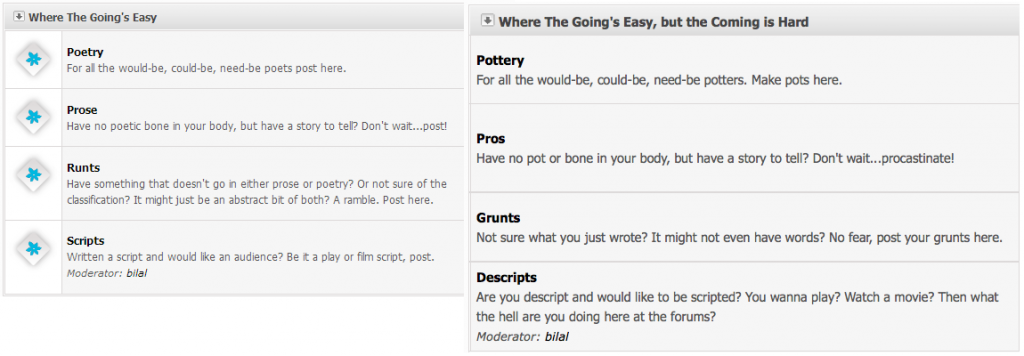
This year, I decided to play a prank on DWL. The idea had actually come to me last year, in April 2012. Being inspired by Google, YouTube and the various other websites that prank their users on April 1, I thought it would be funny to change the names and descriptions of some of the boards on our forums to parodied versions of the originals. The joke would be meant for our users, who I hoped would enjoy it in keeping with the spirit of the day. I emailed the DWL administrator, Shehla, but the brain spark had come too late and it was already past half the day in Pakistan. We decided that we’d do it next year.

So this year, which is last year’s next year, I emailed Shehla again and we put our evil plan into action. At midnight, Pakistan Standard Time, Shehla made the changes.


Original Columns


Original Goings Easy


Original Workshop


Up until 6pm the next day, only two forum members had noticed that anything was different. If anyone else had, they hadn’t pointed it out. That’s when I decided to email Afia, the Editor of our magazine, who was busy vacationing in Sri Lanka completely oblivious to our scheme. I told her that the forums were messed up and we needed to email our webhosting providers to let them know that DWL’s security had been breached. She thought I was April Fooling her and didn’t even bother to log on to the forums. I also tweeted Waqas, another member of our core team. This is how that conversation went:

Screen Shot 2013-04-03 at 11.48.35 PM

Screen Shot 2013-04-04 at 7.58.16 PM


So far, our prank did not seem to be working well. But then our luck changed. Shehla was busy moving and she did not have a chance to change the text back. So when Waqas and Afia logged into the forums on 2nd April, the parodied names on the boards were still there. This made the two of them suspicious (and a little panicky). On April 2nd I received an email from Waqas:

Subject: I guess the forums were hacked

So the titles of most of the categories on the forums are changed and some of the descriptions are altered, too. It’s not April Fools’ day any more. We need to find out who did this and how to get the titles and descriptions back to normal.”

To which Afia replied:

“Whoever did this should be on our team. They’re bloody clever with words. Evidently not a standard hacking job. So, my guesses: [3 potential parties that she suspected may have had reason to play a prank on DWL, whose names we cannot reproduce here for obvious reasons].

Would it be a dumb idea to acknowledge that this has happened and ask the person responsible to step forward because we’d like them on our team?”

What began as a prank on our users ended up fooling our own admin team, and they wanted to recruit the prankster! This was the icing on the cake. Made the whole thing completely worth it, and made the following email (forged to look like it had come from our webhost provider) all the more fun to send to them:

“Subject: Re: Forums Hacked?

Hello DWL Team aka Afia and Waqas (aka Vics),

I just looked over the DWL forums and everything appears to be normal. If you think that the forums were hacked and the names of the original threads replaced with “bloody clever words” then please contact Omer and Shehla because they just pulled a bloody April Fools joke on you!

Hahahahahhahahahaah. April fools, the both of you!

High five Shehla!

P.S. Whoever did this is already on your team.

The forums are back to their original state now, but our prank’s been put up on the DWL Milestones thread for all posterity.

Write for Justice – Creative Responses to the Hazara Conflict

Two attacks on the Hazara Shia community in Balochistan, Pakistan, have left over 200 people dead within three weeks. The method of protest that the families of the victims employed shook an entire nation: they refused to bury their dead until their community was promised protection. For several days and nights, men, women and children sat out in the January cold and rain on Alamdar Road in Quetta, guarding the bodies and denying themselves the basic dignity of a decent and timely burial for a loved one. In response, a staggering number of protestors came together to hold sit-ins all over Pakistan and the world, moved by the desperation of the Hazara Shias and demanding justice for them. The protests are ongoing as this post goes up.

We asked for your creative responses to the situation as it unfolds. Our understanding is that as writers we cannot be divorced from events around us, and that – cliched as it may sound – when horror confronts us, the most potent weapon we have is our words. So send us your words. All the entries cannot be published, but please know that we appreciate the intensity of feeling behind each and every person’s contribution. Know that you are being read.

Update: On March 3rd, a bombing in the primarily Shi’ite area of Abbas Town, Karachi, wiped out yet more lives and left double the number crippled and homeless. We have started receiving entries on this latest incident and will let the post evolve accordingly. To those of you who are participating, thank you.

***

Parallel Cities

by Sadia Khatri

Karachi exists as two parallel cities. Same world, two cities. In both, lives are lost daily. But in one, the deaths become stories for people beyond the family and certain close friends: sometimes they are shown on TV, limb by limb, shot by graphic shot, bits of stories. And from there they travel to neighbours, well-wishers, to-be-murderers. Eventually they seep over into the other parallel city, whose people have so far strayed safe of similar wake-up calls. They get word of these deaths, glimpse bits of them on various screens, but never really understand or experience them, even while turning them into cautionary tales for their own neighbours, well-wishers and to-be murderers. They think they know numbness, but they are nowhere near yet. This realization comes only in the form of a forceful eviction into the first city, after a dear one gets shot by one injustice or the other. Meanwhile, the parallel city slowly grows and grows old, letting them in, making room for these people even as it has none. In its heart, it hopes it could seal its borders shut, so that only so much pain could exist without overflowing into the other city, without rendering its parallel city numb too.

***

The Circle of Death

by Farheen Zehra


Less than 48 hours ago, the now desolate and mangled apartment building in Abbas Town was teeming with people.

Who were these people?

Weren’t they, like most of us, glued to television sets on Sunday watching our team’s T20 match against South Africa? Maybe some friends had gathered to watch the match together at the neighbourhood restaurant that had just installed a television set.

Some of the women must have been in the kitchen, preparing the evening meal. Weren’t they, like many of us, asking their husbands or sons to get away from the television and get bread and eggs for Monday morning? A few of them must have been grumbling under their breath about the uniforms that still lay un-ironed on the ironing stand. Or maybe about the homework that still hadn’t been completed.

And the children – screaming, fighting, crying, laughing, playing, coloring, drawing, oblivious to the worries of the world. For some Monday was a new beginning in a new school. For others, there was a tough test the next day. Maybe a child had his or her birthday party the day before or the day after.

The call for prayers must be similar in Abbas Town and Clifton. Maybe the loudspeaker of their neighbourhood mosque was too loud. Did the boys leave the match and head for the mosque? Some of them may have used this as an excuse to get out of the house to have a smoke. Did a young boy call out to his friend who was heading towards the mosque to pray for the team?

Who were these people?

They were Shia, and Sunni, and maybe Christians and Hindus. Above everything, they were Pakistanis.

But that doesn’t seem to matter anymore, does it?
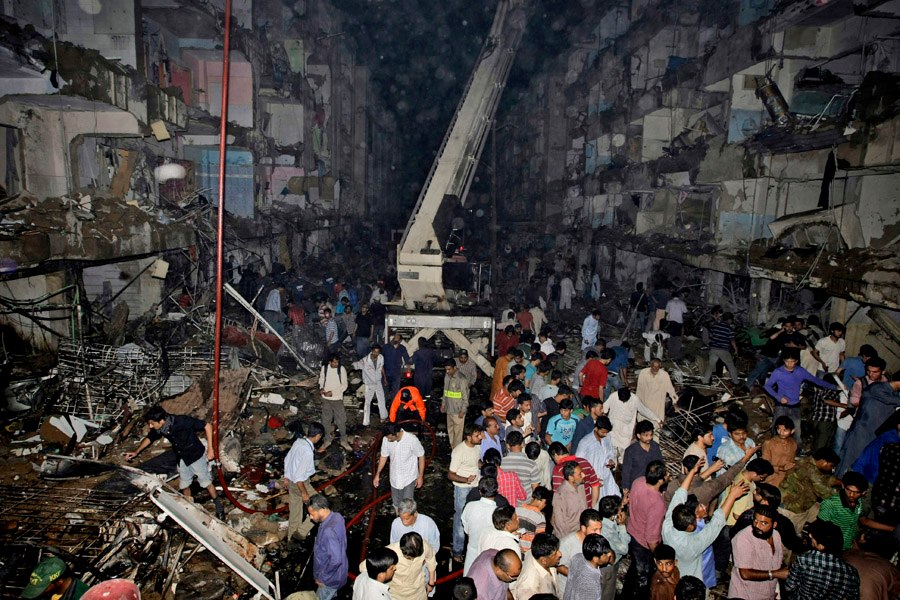
Abbas town

***

Quetta

by Razi Haider


ہیجڑوں کی تالیوں کی گونج , بیبسوں کاسے
اب کے رسن سے لٹکے ہیں جسم و دل کے لاشے
اس قتلگاہ مذہب میں کچھ سر سے کٹی حوریں
ناچے ہیں ایسے جیسے , کوہٹھے پے ہوں تماشے


The echoes of the clapping  eunuchs and the skulls of the  forsaken,

The corpses of the hearts and the souls hang.

On these religious gallows some headless  nymphs

dance as if there is a kerfuffle at the brothel.


***

Identity: Sunni, Shia, Pakistani

by Noorulain Noor

My grandmother, a Shia, migrated to Lahore from Amritsar in 1947. At a refugee camp in the newly created Pakistan, she met my grandfather, a Sunni man, broken after the death of his first wife. He married her against the wishes of his family and brought her to his ancestral home in Old City Lahore.

I would like to think that when my grandparents met, they did not ask each other whether they were Sunni or Shia. I would like to think that it simply did not matter. But it did. It mattered to the point that when my grandmother died after 15 years of marriage, my grandfather was forbidden from burying her in the family plot. Since my grandfather’s family was influential in the city, every graveyard in the immediate vicinity refused to accommodate a Shia immigrant’s dead body. Her children cried next to her corpse on a charpoy for hours until a kindly neighbor offered a burial spot in his cellar. And so a neighbor’s house became my grandmother’s final resting place.

My father was raised Sunni by my grandfather, but a son is always partial to what his mother teaches him. A few years ago he put up the Alam on the rooftop of his office building. A report of this recent development reached my husband, who asked me about it. His extended family began to wonder whether I was Shia. I found out that at one point, I was scrutinized by someone who will go unnamed while offering my prayer to glean more information about my religious inclination. The fact that my father wore black all the time and had displayed the Alam openly made some people in my family uneasy.

I decided to have a chat with my father about this. I was furious with him because of several other things that a father and daughter are bound to disagree on, and so I introduced this topic as a way to fuel the raging fire.

“So, are you going around as Shia now?” I barked.

“What? Where is this coming from?” He asked.

“Well, I am told you have the Alam at your office now.”

“I do. And what I practice is none of your damn business.”

He slammed the phone down. I deserved that and more. I cannot believe that I had the audacity to ask him this question just to hurt him, even though I have always identified myself as both Shia and Sunni because of my grandparents, technicalities and subdivisions and religious decrees be damned.

This is the extent to which sectarian discrimination is ingrained into the hearts and minds of Muslims in Pakistan. I am admitting my weakness in that moment. I am deeply, nay, horrifically ashamed of the question I asked my father and the way in which it came out – accusatory – as if he had committed a sin.

Today, I am proud of my heritage as I have always been. I am both Sunni and Shia. I am Muslim. I am human. For god’s sake we are all human. And I am afraid for my friends and family in Pakistan. I am afraid for my father who still has the Alam perched on his office building. I am afraid for my friends whose names identify them as Shias, easy targets for a fanatic’s bullet.

But I will not let my fear silence me. I am Shia and Sunni and Pakistani. And I am standing alongside the families of all those who were massacred. The demands of the nation are simple: The culprits must be punished; they must be brought to justice; sectarian violence must have serious consequences; Shia murders must be stopped. Now.

***

Target Profiles and Na-Maloom Afraad

by Fahad Naveed


I live in a world where physicality costs people their lives,

a world where the target’s profile is crystal clear,

eyes slightly smaller than mine, complexion slightly lighter

he may be spotted easily in a crowd.

I live in a world where the killer remains ‘na-maloom’,

he need not be physically present to kill,

he cannot be spotted, ’till he uses his bragging rights,

’till he takes ‘responsibility’ of the attack on the news

I live in this world only because my physicality allows me to

because my features do not match the target profile, just yet

***

My reflection

by Taha Kehar

I cannot see my reflection –
Bigotry has made me invincible.

I cannot see my reflection –
Fear has strengthened me.

I cannot see my reflection –
Hostility has given me control.

I cannot see my reflection –
Injustice has become a ray of hope.

I cannot see my reflection –
Defeat has taught me how to win.

(c) Ali Khurshid/Light House (via Humans of Karachi)

(c) Ali Khurshid/Light House (via Humans of Karachi)

***

A Cinquain

by Saima Abbas

Hazaras

Humble, sorrowful

Crying, pleading, peaceful

They cannot be ignored

Humans

551546_489629364430003_1938026687_n

***

Fade

by Mariam Shoaib

I could turn up the volume on the news, but there are bills to pay. The television anchor repeats the alert as I grasp for the car keys.

News keeps  breaking, breaking new  records of  domestic terror and drone-aided calamities.  Quick glance – is it Peshawer, or Karachi?  If I wait any longer, the banks will close, and who can bear late charges in this economy?

I could slow down my car at the chowk, weaving around the men, women, children protesting, asking ‘what are you demanding today?’

But I have been in line for CNG for over 3 hrs, and  still need my job, so in the rear view mirror signboards and chants, like numerous Pakistani lives, fade away.

My voter’s registration application lies blank and menacing on the desk. I would turn it in, and vouch for democracy, but I am out the door…

… Tasbih in hand, tears cloud the path to my brother’s janazah.

Aaj Quetta jal raha hai – Today Quetta burns, again.

***

A star-studded launch for a rising star

Debut author Shazaf Fatima Haider’s humorous novel on arranged marriage – titled How It Happened – had its official Pakistan launch today in Karachi. The event, which was organised by the Lyterati Society at the Lyceum School just off Do Talwar, was a impressive affair as book launches go, with about 300 hundred people in attendance. The launch attracted some big names from the industry, including Pakistan’s most beloved television playwright, Haseena Moin, DSC prize-winning author H.M. Naqvi, and Afzal Ahmed Syed, who is one of the foremost contemporary poets writing in Urdu today.

The event was moderated by our favourite Pakistani author and friend of DWL, the recently Man Asian Prize shortlisted Musharraf Ali Farooqi. Farooqi added a good dose of humour to the conversation, entirely fitting with the mood of the book. Farooqi and Haider touched upon topics as diverse as crazy rishta stories to the impact of the author’s own ancestral history on the book’s characters. Since the novel is a family drama, the moderator asked Haider at one point whether her family saw itself in the book. She quipped that each of her sisters believed themselves to be the character of Zeba, who was supposed to be very beautiful.

Haider reading from her novel

Haider reading from her novel

The launch included a reading by the author and a brief but lovely tribute by Haseena Moin, who praised Shazaf Fatima for having written a novel that acknowledges how times change and forges a path forward for women from her generation. Haider’s book is slated to be a hit in a market starved for readable, feel-good fiction and is sure to strike a chord with South Asian women who’ve suffered the classic rishta-trolley parade ad nauseum. Indeed, Liberty Books had set up a table stacked with copies of the novel at the launch, all of which were sold out even before attendees were done with their tea and samosas.

Desi Writers Lounge is proud to be partnering with Shazaf Fatima Haider in a blog contest to celebrate the 200th anniversary of Pride and Prejudice, Jane Austen’s classic novel on marriages in Regency-era England. The winner will receive a hardcover copy of How It Happened. Details on the contest can be found here.

Celebrate Austen with DWL

January 2013 is the 200th anniversary of one of English literature’s greatest social satires: ‘Pride and Prejudice’ by Jane Austen. To mark the occasion, Desi Writers Lounge is running a blog contest. What’s the funniest true story you’ve got about people getting married? It could be your own story or someone else’s. Botched proposals, unreal rishtas, failed elopements, family feuds, last minute changes of heart – we want to hear it all. Wit and style will be rewarded.

Send your entries of 500 words or less to editor.papercuts@desiwriterslounge.net. The best entries will get published on the DWL blog (that’s what you’re reading right now) and the winning entry will also receive a copy of the funniest new book in town about arranged marriage: How It Happened by Shazaf Fatima Haider (Penguin India). Deadline: 29th January.

Time to get funny, peeps.